Bones, Joints, and the Ratio Nobody's Talking About: The Ca:P Problem Hidden in Your Dog's Bowl
If you've ever flipped a dog food bag looking for the calcium content, you're already ahead of most owners. But here's the thing — that number alone tells you almost nothing useful. What actually matters is how that calcium stacks up against the phosphorus in the same food. The relationship between these two minerals is one of the most overlooked variables in canine nutrition, and getting it wrong has consequences that show up slowly, quietly, and sometimes irreversibly.
Let's break it down.
Why Calcium and Phosphorus Are a Package Deal
Calcium and phosphorus don't operate independently in your dog's body. They're metabolically linked — meaning the amount of one directly affects how the other is absorbed and utilized. The body manages this relationship through a hormonal feedback loop involving parathyroid hormone and vitamin D. When the ratio between these two minerals gets skewed, that system starts to compensate in ways that pull calcium right out of your dog's bones.
Phosphorus is found in almost everything dogs eat — meat, organs, grains, legumes. Calcium, on the other hand, is harder to come by in meaningful amounts unless it's been deliberately added. That asymmetry is exactly why so many commercial foods end up phosphorus-heavy without anyone flagging it as a problem.
What the Ideal Range Actually Looks Like
According to AAFCO nutritional guidelines, the minimum calcium-to-phosphorus ratio for adult dogs is 1:1, with an upper recommended limit of around 2:1. For growing puppies, the acceptable range tightens considerably — the NRC recommends a ratio between 1.2:1 and 1.4:1 — because skeletal development during the first year is extraordinarily sensitive to mineral imbalances.
Large and giant breed puppies are in a category of their own. Excess calcium during growth phases in these breeds has been directly linked to developmental orthopedic disease — conditions like osteochondrosis and hip dysplasia that affect quality of life for years. For these dogs, more calcium isn't just unhelpful, it's actively harmful.
Senior dogs face a different challenge. As kidney function naturally declines with age, phosphorus clearance slows down. A diet that was perfectly fine at age three can start tipping into problematic phosphorus accumulation by age nine or ten. That's not a crisis for every senior dog, but it's worth knowing.
How Commercial Foods Get This Wrong
Here's where things get frustrating. A lot of premium-priced commercial dog foods — even ones marketed as grain-free, high-protein, or holistically formulated — are quietly running high phosphorus levels because of how heavily they lean on muscle meat, organ meat, and legumes. These are all high-phosphorus ingredients. Without deliberate calcium supplementation to balance the formula, the ratio drifts.
And the label won't always tell you. Guaranteed analysis panels list minimums and maximums, not exact values. So a food listing "calcium: 1.0% min" and "phosphorus: 0.8% min" looks fine on paper — but the actual values could be 1.1% calcium and 1.6% phosphorus, which puts the ratio at roughly 0.7:1. That's well outside the recommended window.
Raw feeders face a similar challenge from the other direction. Homemade raw diets without careful bone content calculation often swing calcium-heavy. Raw meaty bones can push ratios past 2:1 depending on how the diet is structured, which suppresses phosphorus absorption and creates its own set of problems.
Signs That Something Might Be Off
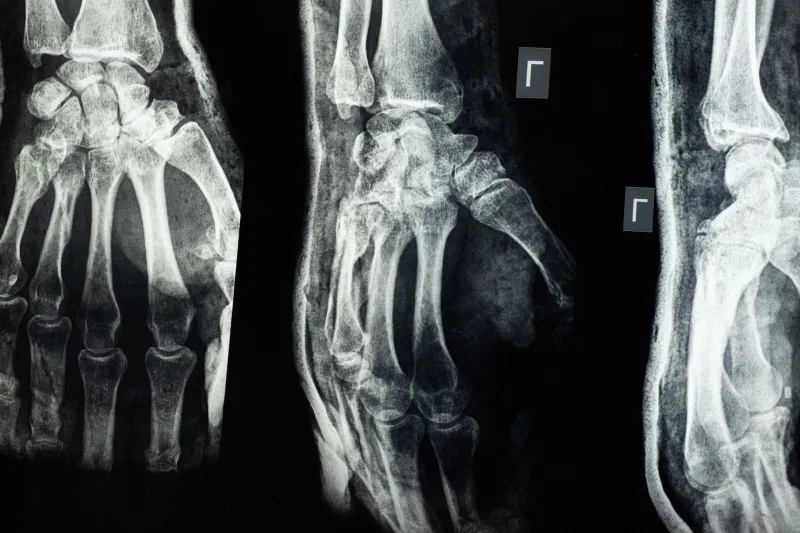
Skeletal mineral imbalances don't announce themselves with obvious symptoms — at least not early on. What you're more likely to notice is subtle: reluctance to jump or climb stairs, stiffness after rest, a slight change in gait. In growing puppies, you might see bowing of the legs or an unusual posture when sitting.
More severe deficiencies can lead to pathological fractures — bones that break under normal load. By the time that's happening, the damage has been building for a long time.
Blood calcium levels are also a misleading diagnostic tool. The body is extremely good at maintaining serum calcium in the normal range by pulling it from bone — which means bloodwork can look totally normal even when skeletal reserves are being quietly depleted.
How to Audit Your Dog's Current Diet
Start by contacting the manufacturer of your dog's food directly and asking for the actual as-fed calcium and phosphorus values, not just the guaranteed minimums. Reputable brands will provide this. If they can't or won't, that's a signal worth paying attention to.
Once you have those numbers, divide calcium by phosphorus. You're looking for a result between 1.2 and 1.4 for puppies, and between 1.2 and 2.0 for adult dogs. If you're outside that range, it's worth a conversation with a veterinary nutritionist — not just a general vet visit, but someone who specifically works with canine diet formulation.
If you're feeding a homemade or raw diet, using a tool like the NRC's nutrient guidelines or working with a board-certified veterinary nutritionist (you can find one through the American College of Veterinary Nutrition at acvn.org) is genuinely worth the investment. The stakes are high enough that guessing isn't a great strategy.
The Bottom Line
Calcium matters. But phosphorus matters just as much — and the relationship between the two is what your dog's skeleton is actually built on. Spending a little time understanding that ratio, and checking whether your dog's current food is hitting it correctly for their life stage, is one of the more meaningful things you can do for their long-term health.
Strong bones aren't just about what goes in. They're about what goes in together, and in the right proportions.