Giving Your Dog the Right Supplements at the Wrong Time? Here's What That's Costing Them
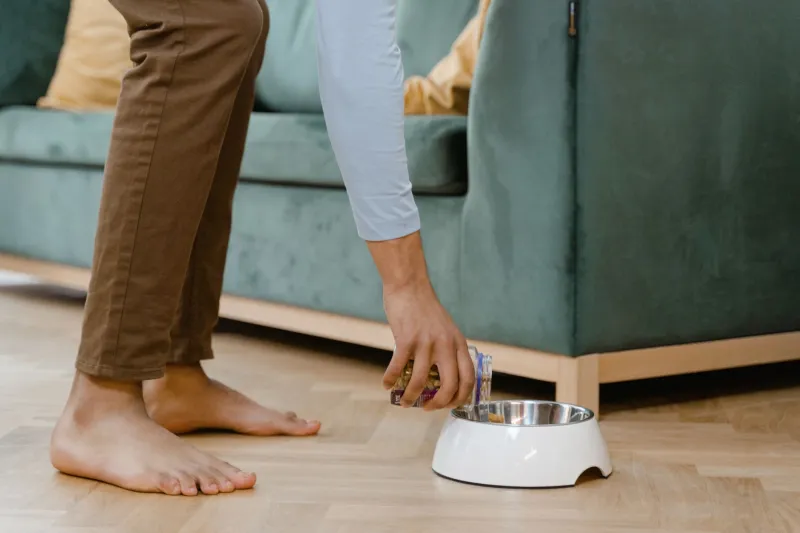
You spent real money on a quality fish oil. You tracked down a probiotic with multiple strains. Maybe you're even adding a joint supplement to help your dog stay comfortable on those morning walks. And every single day, you mix it all into their bowl without a second thought.
Here's the uncomfortable truth: if you're not thinking about when those supplements hit your dog's system — and what else is in the bowl when they do — a surprising chunk of that effort might be going straight to waste.
Nutrient timing isn't just a concept for human athletes. It's real biology, and it applies directly to your dog.
Your Dog's Gut Has a Schedule — Whether You Know It or Not
Digestion isn't a constant, even process. After a meal, your dog's stomach becomes more acidic, bile production ramps up, and the small intestine gets busy sorting and absorbing nutrients. That environment changes significantly depending on how much food is present, what kind of food it is, and how long ago your dog ate.
Some nutrients are absorbed best during active digestion — they need fat in the gut to hitch a ride into the bloodstream. Others actually compete with food components for the same absorption pathways and get crowded out when there's a big meal involved. Giving every supplement at the same time, with the same meal, every single day sounds efficient. But it can quietly undermine the whole operation.
Fat-soluble vitamins — A, D, E, and K — are a classic example. These need dietary fat present to absorb properly. If you're giving a vitamin E supplement to a dog eating a lower-fat meal, or if you're splitting their food into a tiny morning portion and a larger evening one, the vitamin E your dog gets in the morning may absorb at a fraction of the rate it would with the bigger meal.
That's not a flaw in the supplement. That's timing working against you.
The Probiotic Problem Most People Don't Think About
Probiotics have become a staple in a lot of dog wellness routines, and for good reason — a healthy gut microbiome supports digestion, immunity, and even mood. But live bacterial cultures are surprisingly fragile, and the stomach is a harsh environment.
When your dog eats, stomach acid spikes to help break down protein. If you're adding a probiotic powder directly to a protein-heavy meal, those beneficial bacteria are walking into an acidic ambush. Studies in human nutrition — which inform a lot of what we understand about companion animal digestion — suggest that probiotics survive the stomach far better when taken just before a meal, or with a small amount of food that buffers stomach acid without triggering a full acid surge.
For dogs, that might mean giving the probiotic about 15 to 20 minutes before their main meal, or mixing it with a small spoonful of food as a buffer. It's a small shift, but it can meaningfully change how many live cultures actually make it to the intestine where they do their work.
Minerals That Don't Play Well Together
Here's where timing gets especially important for dog owners supplementing multiple things at once. Certain minerals actively compete for absorption. Calcium and zinc are a well-documented example — they share the same transport proteins in the intestinal wall. If you're giving a calcium supplement and a zinc supplement at the same meal, they're essentially fighting over the same door.
The same dynamic plays out with iron and calcium, and with copper and zinc. If your dog is getting a multi-mineral supplement alongside a high-calcium diet — or if you're adding bone meal to a food that already contains supplemental zinc — you could be creating a quiet deficiency in one nutrient by overloading another at the same time.
The fix isn't necessarily to stop supplementing. It's to spread things out. Giving mineral supplements at different meals — or at least a couple of hours apart — can dramatically reduce that competition and improve how much your dog actually retains.
Meal Spacing: The Underrated Variable
How you space your dog's meals across the day also affects supplement effectiveness in ways most owners never consider. Dogs who eat once a day have one absorption window. Dogs who eat twice a day have two — and that creates real flexibility in how you distribute supplements.
For dogs on joint supplements like glucosamine or chondroitin, some research suggests that consistent, evenly spaced dosing helps maintain steadier tissue levels than a single large dose. Splitting the daily amount between morning and evening meals may produce better long-term results than dumping it all in one bowl.
For omega-3 supplements, the picture is slightly different. Since these are fat-soluble, you want them paired with a fat-containing meal either way — but giving them with your dog's larger or fattier meal of the day (if your dog's portions vary) is generally the smarter call.
Building a Smarter Supplement Schedule
You don't need a spreadsheet or a pharmacy background to sort this out. A few practical principles go a long way:
Pair fat-soluble vitamins with fat-containing meals. If your dog eats twice a day and one meal is larger or richer, that's where vitamins A, D, E, and K belong.
Give probiotics before the meal, not during. A small buffer of food is fine, but avoid dumping live cultures into the middle of active protein digestion.
Separate competing minerals by at least a few hours. If you're giving calcium and zinc, don't give them at the same meal. Morning and evening works well for most households.
Match joint supplement doses to meal frequency. If your dog eats twice daily, split the glucosamine or chondroitin dose between both meals rather than front-loading it.
Check your food first. Before adding any supplement, know what's already in your dog's food at meaningful levels. Many quality foods already contain zinc, copper, and calcium — and that baseline matters when you're timing additional supplementation.
The Takeaway
Supplementation is one of the most meaningful investments you can make in your dog's long-term health. But the conversation almost always stops at what to give — and rarely gets to when and how. The biology of absorption doesn't care how premium your supplements are if the timing is working against them.
At Pure Dog Excel, we think dogs deserve nutrition that actually does what it's supposed to do — not nutrition that looks good on paper but gets undermined by avoidable mistakes. Revisiting your supplement schedule is one of the lowest-effort, highest-impact changes you can make. And it doesn't cost you a thing.